Los productos ofrecidos en Boodvape están restringidos por la edad y destinados únicamente a adultos con edad legal para fumar. Todos los pedidos en el sitio web se verificarán mediante un software de verificación de edad líder en el sector.
Al entrar en nuestro sitio web, confirma que tiene la edad legal para fumar en su jurisdicción y acepta la verificación de edad.
¿Son seguros los cigarrillos electrónicos sin nicotina? La impactante verdad que debes saber en 2026
Understanding Nicotine Free Vapes
What Are Nicotine Free Vapes?
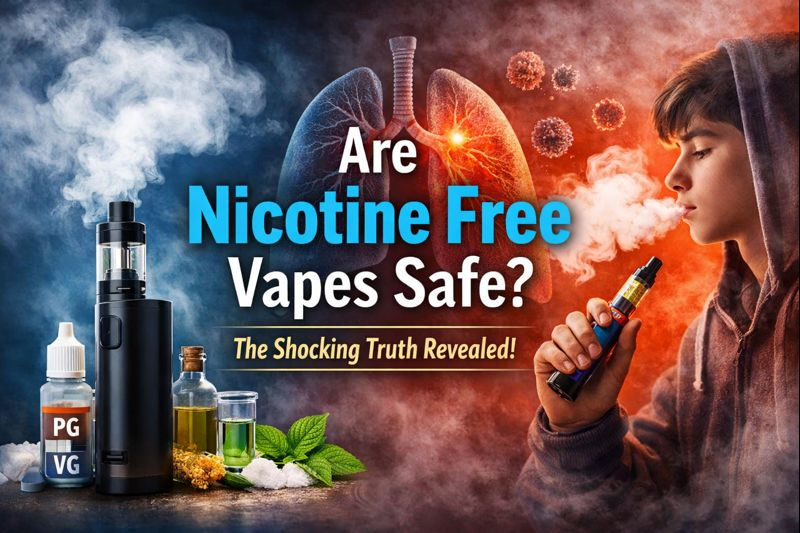
Nicotine free vapes are electronic vaping devices that produce aerosolized vapor without nicotine, the addictive stimulant found in cigarettes and most e-liquids. Instead, these products rely on flavored liquids made from vegetable glycerin (VG) and propylene glycol (PG).
How They Differ From Nicotine Vapes
The main difference is addiction risk. While traditional vapes deliver nicotine to the bloodstream, nicotine free vapes aim to provide flavor and vapor sensation only. However, are nicotine free vapes safe simply because nicotine is removed? The answer isn’t that simple.
Ingredients in Nicotine Free Vapes
Common Base Liquids
Most nicotine free vapes contain:
Propylene Glycol (PG)
Vegetable Glycerin (VG)
These substances are generally recognized as safe for ingestion, but inhaling them is different from eating them.
Flavoring Chemicals
Flavorings such as diacetyl, acetyl propionyl, and benzaldehyde may be present. When heated and inhaled, some flavorings can irritate lung tissue or trigger inflammation.
What’s Missing Without Nicotine
Removing nicotine eliminates dependency and withdrawal symptoms, but does not remove all health risks linked to inhalation of heated aerosols.
Are Nicotine Free Vapes Safe for Your Lungs?
Effects of Inhaling Vapor
Even without nicotine, vapor contains ultrafine particles that can enter deep lung tissue. Studies show these particles may cause temporary inflammation.
Short-Term Respiratory Irritation
Users commonly report:
Dry throat
Tos
Opresión en el pecho
These effects are usually mild but signal irritation.
Long-Term Lung Health Concerns
Long-term data is limited. Medical experts warn that regular inhalation of any foreign aerosol may pose cumulative risks over time.
Health Risks Beyond the Lungs
Heart and Circulatory Effects
Nicotine is the primary cardiovascular risk in vaping, so removing it lowers heart strain. However, some studies suggest heated aerosols may still affect blood vessel function.
Brain and Nervous System Impact
Without nicotine, there’s no chemical addiction. Still, habitual vaping can reinforce behavioral dependence, especially in young users.
Are Nicotine Free Vapes Safe for Teens?
Youth Appeal and Flavor Risks
Sweet and fruity flavors attract teens, raising concerns among health authorities like the U.S. Food and Drug Administration.
Addiction Without Nicotine?
While chemical addiction is absent, habit-forming behavior and social dependency remain real risks.
Comparing Nicotine Free Vapes vs Smoking
Harm Reduction Perspective
Compared to smoking combustible cigarettes, nicotine free vapes:
Produce no tar
Avoid carbon monoxide
Eliminate nicotine addiction
This makes them menos perjudicial que fumar, but not harmless.
Not Risk-Free but Less Harmful
Medical consensus agrees: vaping without nicotine is safer than smoking, yet breathing clean air remains the safest option.
Regulatory and Medical Viewpoints
What Health Authorities Say
Organizations such as the World Health Organization caution that vaping products should not be considered safe, regardless of nicotine content.
Research Limitations
Most studies are short-term. Scientists emphasize the need for decades-long research before declaring nicotine free vapes safe.
Myths About Nicotine Free Vapes
Myth: “Nicotine free means harmless.” Truth: It only removes addiction, not inhalation risks.
Myth: “They’re just flavored air.” Truth: Vapor contains chemicals and particles.
FAQs: Are Nicotine Free Vapes Safe?
1. Are nicotine free vapes safe for daily use? They are safer than nicotine vapes but not recommended for daily long-term use.
2. Can nicotine free vapes damage lungs? Possible irritation and inflammation may occur with frequent use.
3. Are nicotine free vapes safe during pregnancy? No. Any inhaled chemicals during pregnancy may pose risks.
4. Do nicotine free vapes cause addiction? They don’t cause chemical addiction but may lead to habitual behavior.
5. Are nicotine free vapes approved by doctors? Doctors generally do not recommend vaping unless used as smoking cessation support.
6. Are nicotine free vapes safe compared to smoking? Yes, they are less harmful than smoking but still not risk-free.
Final Verdict: Are Nicotine Free Vapes Safe?
Así que.., are nicotine free vapes safe? The honest answer is they are safer than nicotine vapes and cigarettes—but not completely safe. Removing nicotine reduces addiction and cardiovascular risks, yet inhaling heated chemicals still carries potential harm. For non-smokers and teens, avoidance is best. For smokers seeking harm reduction, nicotine free vaping may be a stepping stone—but not a destination.