Products offered on Boodvape are age-restricted and intended for use by adults of legal smoking age only. All orders on the website will be verified using industry-leading age verification software.
By entering our website, you confirm that you are of legal smoking age in your jurisdiction and agree to age verification.
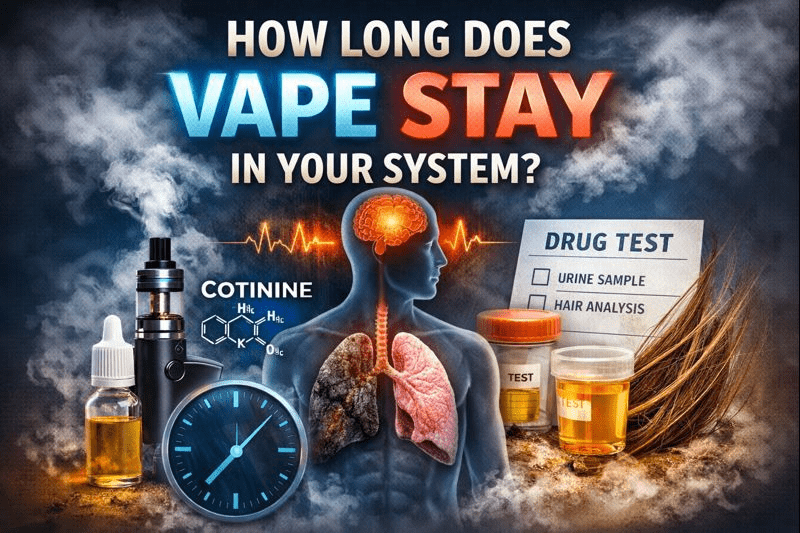
How Long Does Vape Stay in Your System? Shocking Facts You Should Know (2026 Guide)
Introduction
Vaping has become incredibly popular, especially among teens and young adults. Yet one of the most common and important questions people ask is how long does vape stay in your system. Whether you’re concerned about health effects, drug testing, or quitting vaping altogether, understanding how vaping substances behave inside the body is essential.
Unlike traditional cigarettes, vaping involves inhaling aerosolized liquids that often contain nicotine, flavorings, and other chemicals. These substances don’t just disappear instantly. Instead, your body processes them over time, depending on many personal and environmental factors.
In this comprehensive guide, we’ll explore how vaping works inside the body, how long its components remain detectable, and what influences the speed at which your system clears them. By the end, you’ll have a clear, science-backed understanding of what really happens after you vape.
What Is Vaping and What Enters Your Body?
Vaping involves heating a liquid (commonly called e-liquid or vape juice) to create an aerosol that you inhale into your lungs. This aerosol can contain several substances:
Nicotine (optional but common)
Propylene glycol (PG)
Vegetable glycerin (VG)
Flavoring chemicals
Trace metals from heating coils
Once inhaled, these substances pass rapidly from the lungs into the bloodstream, reaching the brain in seconds. Nicotine, in particular, is highly addictive and quickly triggers chemical responses in the nervous system.
How Nicotine Is Processed in the Body
After entering your bloodstream, nicotine travels to the liver, where it is broken down into several byproducts. The most important one is cotinine, which is commonly used in medical and lab tests to detect nicotine use.
Nicotine itself has a short half-life, but cotinine stays in the body much longer. This is why tests usually look for cotinine instead of nicotine when determining recent vaping or smoking activity.
How Long Does Vape Stay in Your System? (Detection Breakdown)
Nicotine in Blood
Nicotine typically leaves the bloodstream within 1–3 days. However, trace amounts may linger slightly longer in frequent users.
Cotinine in Urine
Cotinine can be detected in urine for 3–7 days, and sometimes up to 10 days in heavy or long-term vapers.
Saliva Tests
Saliva may show nicotine or cotinine for about 1–4 days after last use.
Hair Tests
Hair follicle tests are the most sensitive. Nicotine and cotinine may be detectable for up to 90 days, though these tests are less common.
Factors That Affect How Long Vape Stays in Your System
Several variables influence how quickly your body clears vaping substances:
Frequency of Vaping
Occasional users clear nicotine faster than daily or heavy users.
Nicotine Strength
Higher nicotine concentrations take longer to metabolize and eliminate.
Metabolism
People with faster metabolisms process and remove nicotine more quickly.
Age
As we age, liver function and metabolism slow down, increasing retention time.
Hydration and Diet
Staying well-hydrated and eating antioxidant-rich foods can support detox processes.
Body Fat
Nicotine can bind to fat cells, meaning people with higher body fat may retain traces longer.
Does Nicotine-Free Vaping Stay in Your System?
Nicotine-free vapes do not introduce nicotine or cotinine into your body. However, other chemicals such as PG, VG, and flavoring agents are still inhaled.
These substances are generally cleared within 24–48 hours, but repeated exposure may still irritate the lungs or airways. While they are less detectable in tests, they are not completely risk-free.
Vaping vs Smoking: Clearance Time Comparison
Aspect
Vaping
Smoking
Main Addictive Substance
Nicotine
Nicotine
Detection Marker
Cotinine
Cotinine
Clearance Time
Similar
Similar
Additional Toxins
Fewer (but still present)
Many more
Although vaping is often marketed as “cleaner,” nicotine behaves nearly the same in the body whether it comes from cigarettes or vapes.
Can Vaping Affect Drug Tests?
Standard drug tests do not screen for nicotine unless specifically requested. However:
Nicotine tests are common for insurance or medical evaluations
Cotinine tests are used to confirm tobacco or vape use
Vaping does not cause false positives for drugs like THC or opioids unless the vape contains those substances
Always check what type of test is being administered.
How Long Until Your Body Fully Recovers After Vaping?
While nicotine may leave your system within days, recovery takes longer:
24–72 hours: Nicotine largely cleared
1–2 weeks: Improved circulation and oxygen levels
1–3 months: Lung cilia begin repairing
6–12 months: Lung function and breathing noticeably improve
Quitting vaping allows your body to begin healing almost immediately.
Tips to Help Clear Vape Residue Faster
While you can’t instantly remove nicotine, healthy habits can support natural detoxification:
Drink plenty of water
Exercise regularly to boost metabolism
Eat fruits and vegetables rich in antioxidants
Get quality sleep
Avoid secondhand smoke or vape exposure
There is no proven “quick detox,” but consistency helps.
FAQs About Vaping and Your System
1. How long does vape stay in your system after one use?
For a single use, nicotine may clear within 1–3 days, depending on metabolism.
2. Can vaping be detected after a week?
In heavy users, cotinine may still be detectable in urine after a week.
3. Does vaping without nicotine show up on tests?
No, nicotine-free vaping does not show up on nicotine or cotinine tests.
4. Is vaping safer because it leaves the system faster?
Not necessarily. Faster clearance does not mean harmless effects on lungs or heart.
5. Can exercise remove nicotine faster?
Exercise supports metabolism but cannot instantly eliminate nicotine.
6. Does vaping affect teenagers differently?
Yes. Developing brains process nicotine differently, increasing addiction risk and retention.
Conclusion
Understanding how long does vape stay in your system helps you make informed choices about your health. While nicotine may clear within days, its effects on the brain, lungs, and heart can last much longer—especially with regular use.
Vaping is not risk-free, even when marketed as a safer alternative. The good news is that once you stop, your body begins repairing itself almost immediately. Knowledge is power, and being informed is the first step toward healthier decisions.