A Boodvape által kínált termékek korhatárosak, és kizárólag a törvényes dohányzási korú felnőttek általi használatra szolgálnak. A weboldalon minden megrendelést az iparág vezető korellenőrző szoftverével ellenőriznek.
A weboldalunkra való belépéssel Ön megerősíti, hogy az Ön joghatósága szerinti törvényes dohányzási korban van, és beleegyezik az életkor ellenőrzésébe.
Van kotinin a vaporizátorokban? A meglepő igazság, amit tudnod kell (2026-os útmutató)
Bevezetés
Many people who vape—or are thinking about quitting—often ask an important question: a kotinin a vaporizátorokban? This question usually comes up when someone faces a nicotine test, applies for insurance, or simply wants to understand what vaping does to their body.
Cotinine is closely linked to nicotine, but it’s widely misunderstood. Some believe it’s an ingredient added to vape liquids, while others think it appears only after smoking cigarettes. The truth is more nuanced—and knowing it can help you make smarter health decisions.
In this guide, we’ll break down exactly what cotinine is, whether it’s found in vapes, how it enters your system, and why it’s so important in medical and lab testing.
What Is Cotinine?
A kotinin not a drug és not an additive. It is a byproduct created when your body processes nicotine.
How Cotinine Is Formed
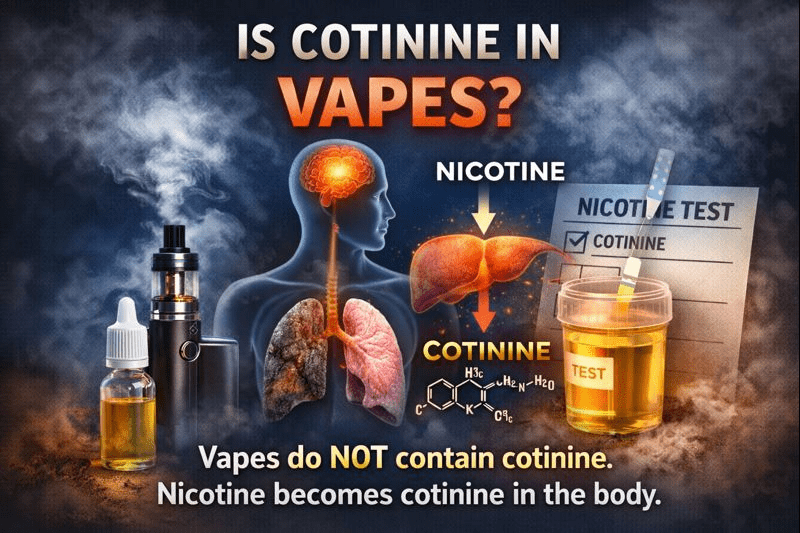
When nicotine enters your bloodstream (from vaping, smoking, or nicotine replacement products), your liver metabolizes it. During this process:
Nicotine is broken down
Cotinine is produced as the main metabolite
Cotinine stays in the body longer than nicotine
Because of this, cotinine is the most reliable marker used to detect nicotine exposure.
Is Cotinine in Vapes? (Clear Answer)
No — cotinine is NOT in vapes.
This is the most important takeaway.
Vape liquids do not contain cotinine
Cotinine forms only after nicotine is metabolized in the body
If a vape contains no nicotine, cotinine will not appear
Szóval, amikor az emberek megkérdezik a kotinin a vaporizátorokban, the correct answer is: 👉 Cotinine is not in vapes, but vaping nicotine leads to cotinine in your system.
Why Cotinine Is Associated With Vaping
Although cotinine is not an ingredient, vaping is strongly associated with cotinine because:
Most vapes contain nicotine
Nicotine converts into cotinine after use
Cotinine remains detectable for days
This is why medical tests don’t look for nicotine itself—they look for cotinine.
Does Nicotine-Free Vaping Produce Cotinine?
Nem.
If a vape is truly labeled nikotinmentes, then:
No nicotine enters the body
No cotinine is produced
Nicotine tests should be negative
However, studies have shown that some “nicotine-free” vapes may contain trace nicotine, which can still produce low cotinine levels. This is rare, but possible with poorly regulated products.
How Long Does Cotinine Stay in Your System After Vaping?
The presence of cotinine depends on how often and how much you vape.
Átlagos észlelési idők
Vér: 1–3 nap
Nyál: 1–4 nap
Vizelet: 3–7 days (up to 10 days in heavy users)
Haj: Legfeljebb 90 nap
Cotinine stays much longer than nicotine, which is why it’s the gold standard for testing.
Why Do Doctors and Labs Test for Cotinine?
Cotinine is used because it is:
More stable than nicotine
Easier to detect
Less affected by short-term use
Common Uses
Health insurance screenings
Employment nicotine testing
Dohányzásról való leszokási programok
Medical research
If cotinine is present, it means nicotine entered the body recently, regardless of the source.
Vaping vs Smoking: Cotinine Levels Compared
Source
Cotinine Production
Detection Time
Vaping (nicotine)
Igen
Similar to smoking
Cigarettes
Igen
Similar
Nicotine patches/gum
Igen
Similar
Nicotine-free vape
Nem
Nincs
Your body does not care how nicotine enters—only that it did.
Can Cotinine Cause Health Problems?
Cotinine itself is not highly toxic, but it signals nicotine exposure, which is linked to:
Megnövekedett pulzusszám
Blood pressure changes
Addiction
Brain development issues (especially in teens)
So while cotinine isn’t the villain, it’s a red flag marker.
How to Reduce Cotinine Levels Naturally
There’s no instant way to remove cotinine, but healthy habits help:
Stop nicotine use
Drink water
Exercise regularly
Eat antioxidant-rich foods
Get quality sleep
Time is the most important factor.
FAQs About Cotinine and Vaping
1. Is cotinine in vapes themselves?
No. Cotinine is not added to vape liquids.
2. Why did my test show cotinine if I vape?
Because your body converted nicotine into cotinine.
3. Can secondhand vapor cause cotinine?
Very rarely, and usually at extremely low levels.
4. Will nicotine-free vapes cause cotinine?
No, unless the product contains hidden nicotine.
5. Is cotinine only linked to cigarettes?
No. Any nicotine source can produce cotinine.
6. How long before cotinine is gone completely?
Usually within 7–10 days, depending on usage and metabolism.
Következtetés
Szóval, a kotinin a vaporizátorokban? The answer is clear: cotine is not in vapes, but vaping nicotine causes cotinine to form inside your body.
Understanding this distinction is crucial for health awareness, testing accuracy, and informed decision-making. If avoiding cotinine matters to you—for medical, legal, or personal reasons—the only sure way is to avoid nicotine altogether.
Knowledge like this empowers you to take control of your health.