I prodotti offerti su Boodvape sono limitati all'età e destinati all'uso da parte di adulti in età legale per fumare. Tutti gli ordini sul sito web saranno verificati utilizzando un software di verifica dell'età leader del settore.
Accedendo al nostro sito web, l'utente conferma di avere l'età legale per fumare nella propria giurisdizione e accetta la verifica dell'età.
Quanta nicotina c'è in una sigaretta elettronica usa e getta? La scioccante verità spiegata in modo semplice (2026)
What Is Nicotine and Why Does It Matter?
Nicotine is a naturally occurring stimulant found in tobacco plants. It’s the primary substance responsible for addiction in smoking and vaping products. When people ask how much nicotine is in a disposable vape, they’re usually trying to understand how strong it is, how addictive it may be, and how it compares to cigarettes.
Nicotine affects the brain by releasing dopamine, which creates feelings of pleasure and relaxation. While nicotine itself isn’t the main cause of smoking-related diseases, it is addictive, which is why understanding dosage is so important—especially with modern disposable vapes that can contain surprisingly high amounts.
Understanding Disposable Vapes
Disposable vapes are single-use electronic vaping devices that come pre-filled with e-liquid and a fully charged battery. Once the e-liquid runs out or the battery dies, the device is discarded.
They’ve become extremely popular because they are:
Ready to use out of the box
Small and discreet
No refilling or charging required
However, convenience often comes with high nicotine content, which leads many users to ask again: how much nicotine is in a disposable vape compared to other products?
How Much Nicotine Is in a Disposable Vape?
Nicotine Strength (mg/mL Explained)
Most disposable vapes contain nicotine measured in milligrams per milliliter (mg/mL). Common strengths include:
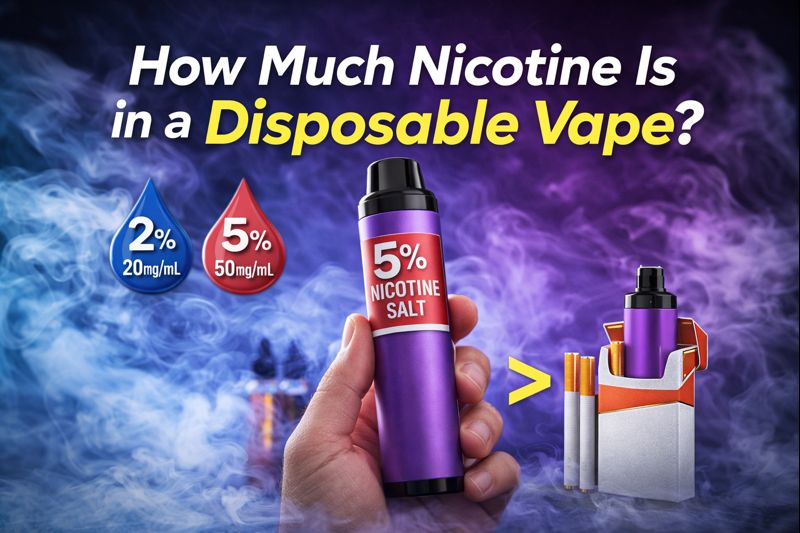
20 mg/mL (2%) – Common in countries with nicotine limits
35 mg/mL (3.5%) – Medium strength
50 mg/ml (5%) – Very high strength, popular in the U.S.
A 5% disposable vape means 50 mg of nicotine per milliliter of e-liquid, which is extremely strong.
Total Nicotine per Device
Here’s where things get eye-opening.
Many disposable vapes contain 8–15 mL of e-liquid. That means:
10 mL × 50 mg/mL = 500 mg of nicotine total
That doesn’t mean you absorb all 500 mg, but it shows just how much nicotine is available in one device.
For comparison, a single cigarette delivers about 1–2 mg di nicotina assorbita.
Puff Count vs Nicotine Intake
Disposable vapes are often marketed with puff counts like:
600 puffs
2,000 puffs
5,000+ puffs
More puffs usually mean more e-liquid, which means more nicotine overall. A 5,000-puff disposable can contain as much nicotine as several packs of cigarettes.
Disposable Vape vs Cigarettes
Many users want to know how disposable vapes compare to smoking.
Approximate comparison:
1 cigarette: 1–2 mg absorbed nicotine
1 pack (20 cigarettes): ~20–40 mg absorbed
1 high-strength disposable vape: Can contain 200–500 mg total nicotine
This doesn’t mean vaping is the same as smoking, but it shows why disposable vapes can be very addictive, especially for new users.
Factors That Affect Nicotine Absorption
Not everyone absorbs nicotine the same way. Factors include:
Puff length and frequency
Device power and airflow
Nicotine type (freebase vs nicotine salts)
User tolerance and experience
Most disposable vapes use sali di nicotina, which are smoother and allow higher nicotine levels without harsh throat irritation.
Is High Nicotine in Disposable Vapes Safe?
Health authorities like the Centers for Disease Control and Prevention warn that high nicotine exposure can cause:
Aumento della frequenza cardiaca
Nausea or dizziness
Mal di testa
Strong dependence
While vaping is widely considered less harmful than smoking for adult smokers, non-smokers and young people face higher addiction risks, especially with high-nicotine disposables.
Nicotine Regulations Around the World
Nicotine limits vary by country:
UK & EU: Max 20 mg/mL
Stati Uniti: No federal nicotine cap
Australia: Nicotine vapes require prescription
These regulations exist precisely because of concerns about how much nicotine is in a disposable vape and how easily it can lead to addiction.
Come scegliere il giusto contenuto di nicotina
If you vape, choosing the right strength matters:
Heavy smokers: May start with higher nicotine, then reduce
Light smokers: Lower nicotine (10–20 mg/mL)
Non-smokers: Best to avoid nicotine entirely
Reducing nicotine gradually can help manage dependence over time.
Common Myths About Disposable Vape Nicotine
❌ “It’s just flavored vapor”
❌ “Disposable vapes have less nicotine than cigarettes”
❌ “You can’t get addicted from vaping”
All three are false. Disposable vapes often deliver more nicotine, not less.
Domande frequenti (FAQ)
1. How much nicotine is in a disposable vape on average? Most contain between 20–50 mg/mL, with total nicotine ranging from 100–500 mg per device.
2. Is 5% nicotine a lot? Yes. 5% (50 mg/mL) is considered very high nicotine strength.
3. How many cigarettes equal one disposable vape? Depending on size and strength, one disposable can equal 1–3 packs of cigarettes in nicotine content.
4. Can disposable vapes cause nicotine poisoning? Excessive use can cause symptoms like nausea, dizziness, and rapid heartbeat.
5. Why do disposable vapes feel stronger than cigarettes? Nicotine salts absorb faster and feel smoother, making them seem stronger.
6. Are nicotine-free disposable vapes available? Yes, but they are less common and still carry other health considerations.
Conclusione
Quindi, how much nicotine is in a disposable vape? In many cases, a lot more than people expect. With high-strength nicotine salts and large e-liquid capacities, disposable vapes can deliver nicotine levels equal to multiple packs of cigarettes.
Understanding nicotine content helps you make safer, smarter choices—especially if you’re trying to avoid addiction or gradually reduce nicotine intake.