Products offered on Boodvape are age-restricted and intended for use by adults of legal smoking age only. All orders on the website will be verified using industry-leading age verification software.
By entering our website, you confirm that you are of legal smoking age in your jurisdiction and agree to age verification.
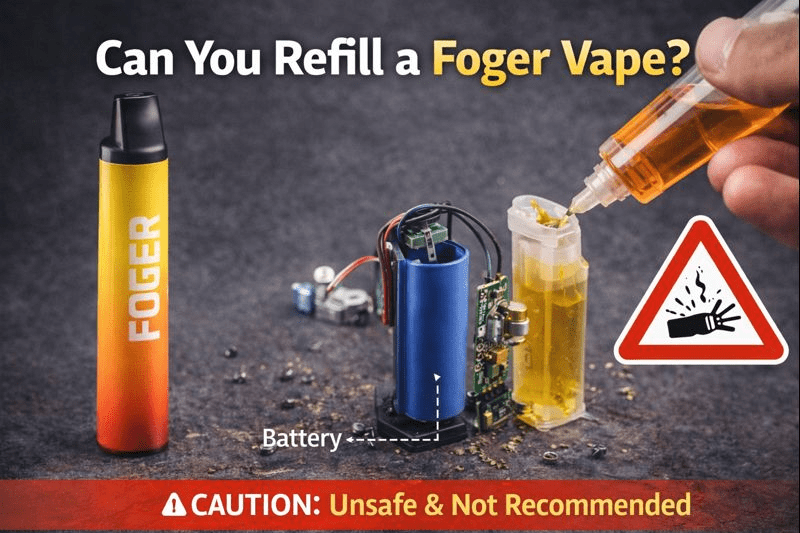
Can You Refill a Foger Vape? The Honest Answer, Risks & Safer Alternatives (2026 Guide)
What Is a Foger Vape?
Before answering can you refill a Foger vape, it’s important to understand what kind of device it is.
A Foger vape is a disposable vape device, manufactured by Foger, designed to be:
Pre-filled with e-liquid
Pre-charged (some models rechargeable, but still disposable)
Used until empty, then discarded
Disposable vs Refillable Vapes
Unlike refillable pod systems, disposable vapes:
Are sealed at the factory
Do not include refill ports
Are not engineered for repeated use
This distinction matters a lot when discussing refilling.
Can You Refill a Foger Vape at All?
The Technical Reality
Short answer: No—Foger vapes are not meant to be refilled.
While some people online claim it’s “possible,” refilling a Foger vape requires forcing the device open, which:
Damages internal seals
Exposes the battery
Compromises airflow and coil integrity
Even if liquid is added, performance is usually poor and short-lived.
Why People Try to Refill Foger Vapes
People often ask can you refill a Foger vape for reasons like:
Trying to save money
Extending the life of the device
Reducing waste
Curiosity about what’s inside
These motivations are understandable—but they come with real downsides.
Risks of Refilling a Foger Vape
This is the most important section to understand.
Battery and Fire Hazards
Foger vapes contain small lithium-ion batteries with no user-serviceable protection. Opening the device can lead to:
Short circuits
Overheating
Fire or battery venting
⚠️ Many vape-related accidents happen during DIY modifications.
Leakage and Health Concerns
Refilling can also cause:
E-liquid leaks into the mouthpiece
Coil flooding or burning
Exposure to nicotine through skin contact
Disposable coils are not designed to handle multiple refill cycles.
Is Refilling a Foger Vape Legal or Advisable?
For personal use, refilling may not be explicitly illegal in many regions—but it:
Voids any warranty
Creates disposal and safety issues
Is strongly discouraged by manufacturers
Selling or distributing refilled disposable vapes is often illegal.
Better Alternatives to Refilling a Disposable Vape
If your goal is saving money or reducing waste, there are much better options.
Refillable Pod Systems
Refillable pod vapes offer:
Designed refill ports
Replaceable pods or coils
Built-in battery protection
They are safer, cheaper long-term, and more reliable.
Rechargeable Disposable-Style Devices
Some modern devices mimic disposable convenience but are:
Fully rechargeable
Designed for limited refills
Much safer than DIY refilling
FAQs: Can You Refill a Foger Vape?
1. Can you safely refill a Foger vape?
No. It’s not designed to be refilled safely.
2. Does refilling affect flavor?
Yes. Flavor usually degrades quickly.
3. Can refilling damage the battery?
Yes, and battery damage can be dangerous.
4. Are there refill holes on Foger vapes?
No. Any opening requires forced disassembly.
5. Is refilling cheaper than buying a new vape?
Short-term maybe—but risks outweigh savings.
6. What should I do with an empty Foger vape?
Dispose of it through proper e-waste or battery recycling.
Final Verdict: Should You Refill a Foger Vape?
So, can you refill a Foger vape? 👉 You shouldn’t.
Foger vapes are disposable by design. Refilling them is unsafe, unreliable, and offers little benefit. If you want refillability, choose a device that’s actually built for it.
🔋 Disposable convenience should never come at the cost of safety.