Die auf Boodvape angebotenen Produkte sind altersbeschränkt und nur für den Gebrauch durch Erwachsene im gesetzlichen Rauchalter bestimmt. Alle Bestellungen auf der Website werden mit branchenführender Software zur Altersverifizierung überprüft.
Mit dem Betreten unserer Website bestätigen Sie, dass Sie in Ihrer Gerichtsbarkeit das gesetzliche Mindestalter für das Rauchen erreicht haben und stimmen einer Altersverifizierung zu.
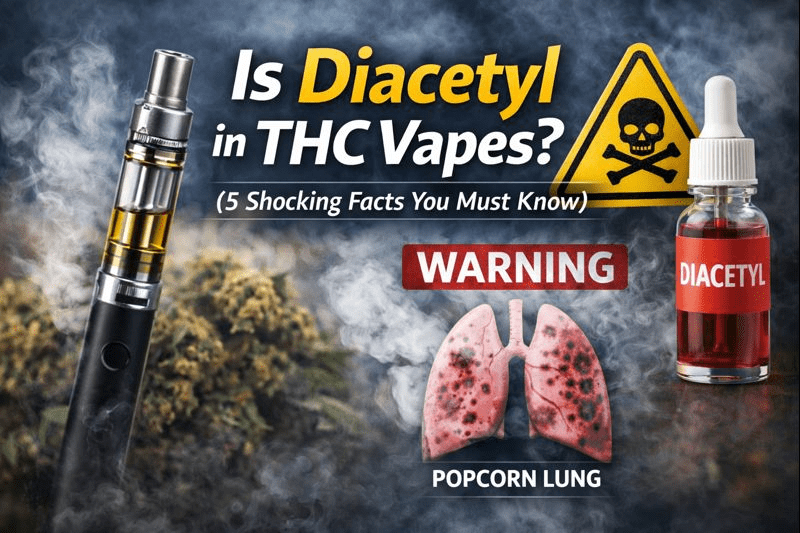
Ist Diacetyl in THC-Kapseln enthalten? (5 schockierende Fakten, die Sie wissen müssen)
If you’ve been asking is diacetyl in THC vapes, you’re not alone. Concerns about vape-related lung injuries and harmful additives have made consumers far more cautious—and rightly so. This guide breaks down the science, the risks, and what you can do to protect yourself, all in clear, beginner-friendly language.
What Is Diacetyl and Why Is It Dangerous?
Diacetyl is a chemical compound used to create a buttery or creamy flavor. It’s commonly found in some food products and flavorings. While it’s considered safe to eat, inhaling diacetyl is a completely different story.
Health Risks of Diacetyl
Linked to bronchiolitis obliterans (“popcorn lung”)
Causes irreversible scarring of lung airways
Symptoms include coughing, shortness of breath, and wheezing
According to public health research shared by the Zentren für Krankheitskontrolle und Prävention, inhaling certain flavoring chemicals can cause severe respiratory damage.
Is Diacetyl in THC Vapes? (The Direct Answer)
Yes—diacetyl can be found in some THC vapes, but not all.
The presence of diacetyl in THC vape cartridges depends on:
Manufacturing standards
Use of flavoring agents
Whether products are lab-tested
Why Diacetyl May Appear in THC Vapes
Some cannabis-derived terpenes naturally resemble buttery flavors
Artificial flavor additives may contain diacetyl
Black-market or unregulated products often skip safety testing
Licensed cannabis brands are increasingly removing diacetyl, but unregulated THC vapes remain a high risk.
Why THC Vapes Are More Concerning Than Nicotine Vapes
While both nicotine and THC vapes can contain additives, THC vapes pose additional risks.
Key Differences
Factor
Nicotine Vapes
THC Vapes
Regulation
Often regulated
Varies widely
Additives
Flavor-based
Terpenes + solvents
Black Market Risk
Mäßig
Hoch
Many vape-related lung injury cases (EVALI) were linked to THC cartridges from informal sources, not licensed dispensaries.
How to Know If Your THC Vape Contains Diacetyl
Because diacetyl isn’t always listed on labels, consumers must be proactive.
What to Look For
Third-party lab reports (COAs)
Clear ingredient lists
“Diacetyl-free” or “no diketones” claims
Red Flags
Extremely sweet or buttery flavors
No batch number or lab QR code
Street-purchased cartridges
If a brand refuses to show lab results, that’s a sign to walk away.
Are Terpenes the Same as Diacetyl?
Not exactly—but they can be related.
Understanding Terpenes
Terpenes are aromatic compounds found naturally in cannabis and other plants. Some terpenes (like diacetyl-adjacent diketones) may degrade into harmful compounds when heated.
This is why temperature control and clean extraction methods matter in THC vaping.
Health Risks of Vaping Diacetyl in THC Products
Inhaling diacetyl—even in small amounts—can be harmful over time.
Possible Effects
Chronic lung inflammation
Reduced lung capacity
Permanent airway damage
The risk increases with:
Frequent vaping
High-temperature devices
Long-term exposure
How to Vape THC More Safely (If You Choose To)
While the safest option is not vaping at all, harm reduction matters.
No universal ban exists, but many legal markets restrict or test for it.
2. Can lab-tested THC carts still contain diacetyl?
It’s rare but possible if regulations don’t require diketone screening.
3. Are flavored THC vapes more dangerous?
Yes. Flavorings increase the risk of diacetyl or similar compounds.
4. Does heating THC oil create diacetyl?
High heat can cause chemical breakdown, increasing inhalation risks.
5. Is popcorn lung common from vaping THC?
It’s uncommon but possible with prolonged exposure to harmful additives.
6. Are dry herb vaporizers safer than THC carts?
Generally yes, because they don’t rely on added solvents or flavorings.
Schlussfolgerung
Also, is diacetyl in THC vapes? The honest answer is sometimes—and that’s the concern. While many reputable brands avoid it, unregulated and flavored THC vapes still pose risks. Staying informed, reading lab reports, and avoiding sketchy products are the best ways to protect your lungs.