Products offered on Boodvape are age-restricted and intended for use by adults of legal smoking age only. All orders on the website will be verified using industry-leading age verification software.
By entering our website, you confirm that you are of legal smoking age in your jurisdiction and agree to age verification.
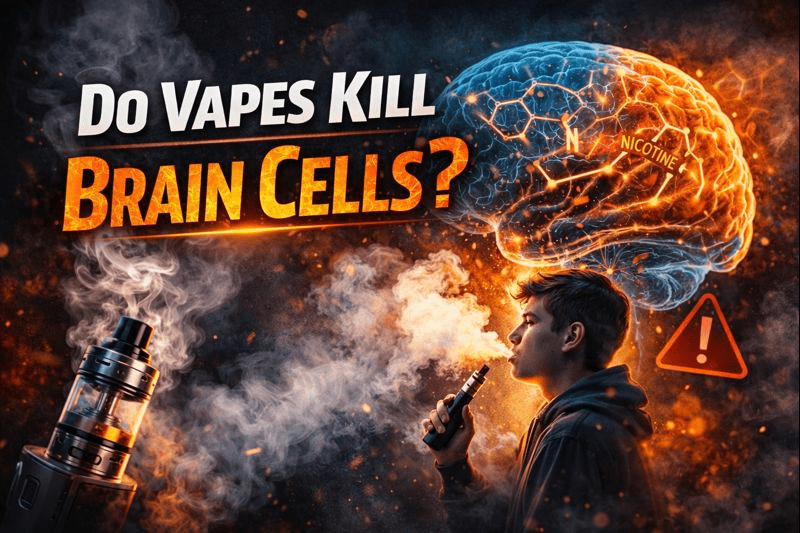
Do Vapes Kill Brain Cells? 9 Alarming Facts You Must Know in 2026
Introduction: Do Vapes Kill Brain Cells or Is It a Myth?
The question do vapes kill brain cells has become increasingly common as vaping grows worldwide, especially among teenagers and young adults. Social media, news headlines, and school discussions often give mixed answers—some alarming, others dismissive.
So what’s the real story?
While vaping doesn’t instantly “kill” brain cells the way a traumatic brain injury might, research shows that vaping—especially nicotine-based vapes—can negatively affect brain development, brain chemistry, memory, and attention. Understanding how and why this happens is critical for making informed decisions about vaping.
What Happens to the Brain When You Vape?
To answer do vapes kill brain cells, we need to understand how vaping affects the brain.
Nicotine and the Brain
Most vapes contain nicotine, a powerful stimulant that directly alters brain chemistry. Nicotine:
Triggers dopamine release (the “feel-good” chemical)
Alters reward pathways
Changes how brain cells communicate
Over time, this can reshape how the brain works—especially in developing brains.
Does Vaping Actually Kill Brain Cells?
Short answer: No direct evidence shows vaping literally kills brain cells outright. However, that doesn’t mean vaping is safe for the brain.
What Science Shows
Nicotine damages neural connections, not necessarily the cells themselves
Brain development can be disrupted, especially in teens
Cognitive functions like memory, focus, and learning may decline
So while vaping may not “kill” brain cells in a dramatic sense, it can impair how brain cells grow, connect, and function.
Why Teens and Young Adults Are at Higher Risk
This is where the question do vapes kill brain cells becomes especially serious.
Developing Brains Are Vulnerable
The human brain continues developing until around age 25. During this time:
Neural pathways are still forming
Decision-making and impulse control are developing
Nicotine exposure during this stage can cause long-lasting changes, increasing risks of:
Attention disorders
Anxiety and mood problems
Addiction to nicotine and other substances
How Vaping Affects Memory and Learning
Studies show that regular nicotine exposure can:
Reduce short-term memory performance
Lower attention span
Slow learning speed
This happens because nicotine interferes with neurotransmitters that help brain cells communicate effectively.
Is Nicotine-Free Vaping Safe for the Brain?
Many people assume nicotine-free vapes solve the problem—but that’s not entirely true.
Hidden Risks
Even “nicotine-free” vapes may:
Contain trace amounts of nicotine
Include chemicals that cause inflammation in brain tissue
Produce oxidative stress, which harms brain cells indirectly
So while nicotine-free vaping is less harmful, it’s not risk-free.
Mental Health Effects Linked to Vaping
Another key part of do vapes kill brain cells involves mental health.
Observed Links
Research has linked vaping to:
Increased anxiety and depression
Mood swings
Sleep disturbances
Nicotine alters dopamine balance, making the brain more dependent on external stimulation to feel normal.
Can the Brain Recover After Quitting Vaping?
Here’s the hopeful news 👍
Recovery Is Possible
Once vaping stops:
Dopamine levels can rebalance
Neural pathways can partially recover
Focus and memory may improve over time
The earlier someone quits, the better the brain’s ability to heal—especially for teens.
Long-Term Brain Risks of Vaping
Long-term vaping may increase risks of:
Cognitive decline
Chronic attention issues
Greater vulnerability to addiction
While research is ongoing, early evidence suggests vaping is not harmless, particularly for the brain.
Common Myths About Vaping and Brain Cells
Let’s clear up confusion around do vapes kill brain cells:
Myth
Reality
Vaping kills brain cells instantly
❌ No
Vaping is harmless to the brain
❌ No
Only smoking affects the brain
❌ False
Teens are more affected
✅ True
FAQs: Do Vapes Kill Brain Cells?
1. Do vapes kill brain cells instantly?
No, but they can impair brain function and development over time.
2. Is vaping worse than smoking for the brain?
Both are harmful; vaping delivers nicotine more easily, which can increase addiction risk.
3. Can vaping lower IQ?
There’s no direct proof of IQ loss, but learning and memory may suffer.
4. Are disposable vapes worse for the brain?
They often contain high nicotine levels, increasing brain impact risk.
5. Does quitting vaping improve brain health?
Yes. Brain chemistry can rebalance after quitting.
6. Is vaping safe for adults over 25?
Less risky than for teens, but still not risk-free.
Conclusion
So, do vapes kill brain cells? Not directly—but they can harm how your brain works, develops, and adapts, especially when nicotine is involved. For teenagers and young adults, the risks are far greater due to ongoing brain development.
The smartest move for long-term brain health? Avoid vaping—or quit as early as possible.