Products offered on Boodvape are age-restricted and intended for use by adults of legal smoking age only. All orders on the website will be verified using industry-leading age verification software.
By entering our website, you confirm that you are of legal smoking age in your jurisdiction and agree to age verification.
How to Make a Vape: The Ultimate Beginner Guide, Safety Facts & Smarter Alternatives (2026)
What Is a Vape and How Does It Work?
Before asking how to make a vape, it’s important to understand what a vape actually is. A vape (or e-cigarette) is an electronic device designed to heat a liquid into an inhalable vapor—without burning it.
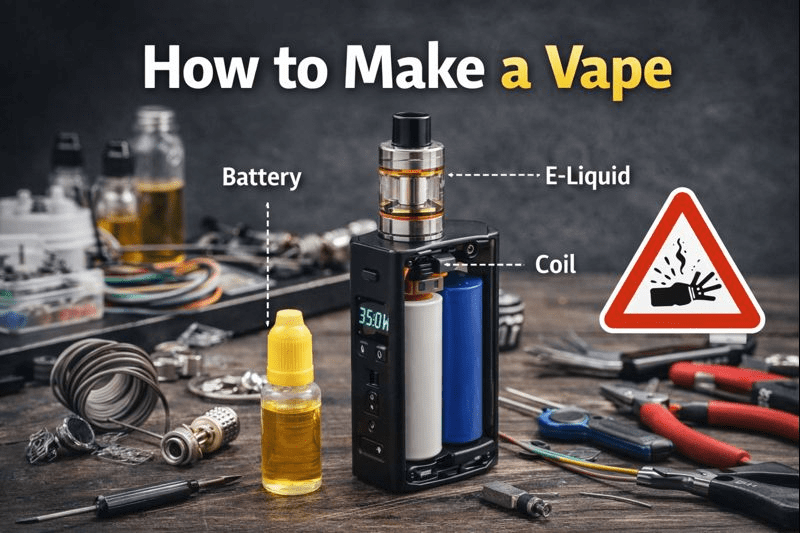
Basic Components of a Vape Device
Most vapes, whether simple or advanced, include:
A battery (usually lithium-ion)
A coil or heating element
A wick (often cotton)
A tank or pod for e-liquid
A mouthpiece
Each part must work together precisely to function safely.
How Vapor Is Created
When activated, the battery sends power to the coil. The coil heats the e-liquid absorbed by the wick, turning it into vapor. This process requires controlled temperatures and stable electrical flow.
Can You Really Make a Vape at Home?
Technically, yes—but practically and safely, it’s not recommended.
DIY Vape Myths vs Reality
Many online tutorials make DIY vapes look easy. In reality:
Improper wiring can cause short circuits
Incorrect resistance can overheat batteries
Household materials are not designed for inhalation
This is why most experts strongly discourage homemade vape devices.
Legal and Safety Considerations
In many regions, selling homemade vapes is illegal. Even for personal use, unsafe devices can cause injury, fires, or toxic exposure.
What You Would Need to Make a Vape (Educational Overview)
This section explains components for understanding only, not as a step-by-step build guide.
Power Source and Battery Basics
Vapes rely on regulated lithium-ion batteries. Without proper protection circuits, batteries can:
Overheat
Vent toxic gases
Explode
Commercial devices include built-in safety chips that DIY versions lack.
Heating Element (Coil) Explained
Coils must match exact resistance levels. A mismatch can:
Burn liquid
Produce harsh vapor
Damage the battery
Precision manufacturing is key here.
E-Liquid or Vape Juice Overview
E-liquids are formulated with specific ratios of:
Propylene glycol (PG)
Vegetable glycerin (VG)
Flavorings (sometimes nicotine)
Using non-vape-safe liquids is dangerous.
Why Making a Vape Yourself Is Risky
This is the most important part of the discussion around how to make a vape.
Battery Explosion and Fire Risks
Most vape accidents happen due to:
Poor battery handling
Incorrect charging
Lack of ventilation
DIY devices dramatically increase these risks.
Health and Contamination Concerns
Materials not designed for vaping can release:
Heavy metals
Plastic fumes
Unknown toxins
Your lungs are not the place to experiment.
Safer Alternatives to Making a Vape
If your goal is customization or saving money, there are far better options.
Buying a Starter Vape Kit
Starter kits are:
Affordable
Pre-tested for safety
Easy for beginners
They eliminate nearly all DIY risks.
Using Refillable Pod Systems
Refillable pods allow:
Flavor control
Lower long-term cost
Minimal technical knowledge
This is the safest “DIY-like” experience available.
FAQs: How to Make a Vape
1. Is it legal to make your own vape?
Personal use may be legal, but selling homemade vapes often isn’t.
2. Can homemade vapes explode?
Yes. Battery failures are a serious risk.
3. Is it cheaper to make a vape yourself?
No. Damage, failure, and medical risks outweigh savings.
4. Can I use household items to vape?
Absolutely not. This is extremely dangerous.
5. Are DIY vapes safer without nicotine?
No. The main danger comes from batteries and materials.
6. What’s the safest way to start vaping?
Use a regulated, commercially made device.
Final Verdict: Should You Make a Vape Yourself?
So, how to make a vape? 👉 The safest answer is: don’t.
While it’s possible to understand how vapes work, building one yourself introduces serious safety, health, and legal risks. Modern vape devices are engineered with protections that homemade versions simply can’t match.
⚠️ If safety matters—and it should—choose a tested, regulated product instead.